AI visibility explained
How we measure AI visibility
What counts as a mention, citation or recommendation, and what a fair before-and-after comparison needs. The Choice explains its evidence standards.
A screenshot can show that a business appeared. On its own, it cannot show why that happened or how much our work improved it. We keep those claims separate so you can judge the evidence for yourself.
Three kinds of evidence
- Observed result: a dated capture of an actual response, with the question and platform visible. Our current public proof stories belong here.
- Measured comparison: a recorded baseline, documented work and comparable retests. We only describe improvement when those records support it.
- Illustrative example: a made-up scenario showing the format or approach. The sample report is not a client result.
What counts as appearing?
- Mention
- The answer names the business. That does not necessarily mean it recommends it.
- Recommendation
- The answer suggests the business as an option for the customer's need. We record the wording and any qualifications.
- Citation
- A source link points to a business-owned page. The page can be cited without the business being recommended.
- Not observed
- The business was not present in the captured response. That is a result to retain, not a reason to discard the test.
These labels can overlap. An answer can recommend a business and cite its website. A normal Google result or map listing is recorded separately from an AI answer. We also note an inaccurate description rather than counting every mention as a success.
What a fair comparison needs
- Agree the test set first. Record the services, places and buyer questions that matter. Keep brand-name questions separate from unbranded discovery questions.
- Capture a baseline. Keep the exact question, platform and mode, date, stated location, available model details and response. Note sign-in or personalisation conditions where known.
- Log the work. Record the pages and business details changed, with dates. Keep the original evidence.
- Retest comparably. Use the same questions and conditions where possible. Declare changes, repeat runs and failures. Do not quietly replace difficult questions with easier ones.
- Show the denominator. Report the number of appearances out of valid tests for each surface and test period. Keep failed requests separate; do not turn missing captures into positive results.
We do not combine unlike platforms into an unexplained score. A comparison should show the counts, scope and dates, with both stronger and weaker results. If conditions change too much, establish a new baseline instead of presenting a like-for-like improvement.
What we can and cannot conclude
A comparable retest can show a change in the tested answers. It does not isolate the effect of our work from model updates, competitor changes or new public information. It also does not prove more enquiries or sales. Those outcomes need their own agreed measurement and customer records.
A recommendation is not an endorsement by the platform. Current public stories do not include a measured before-and-after baseline. Website screenshots captured later provide context, not proof of the website's state when an earlier AI answer was recorded.
See the evidence, not just the claim
The Zebrano Christchurch capture is an observed example: the query, place, surface and result are visible. It is not a calculated uplift.
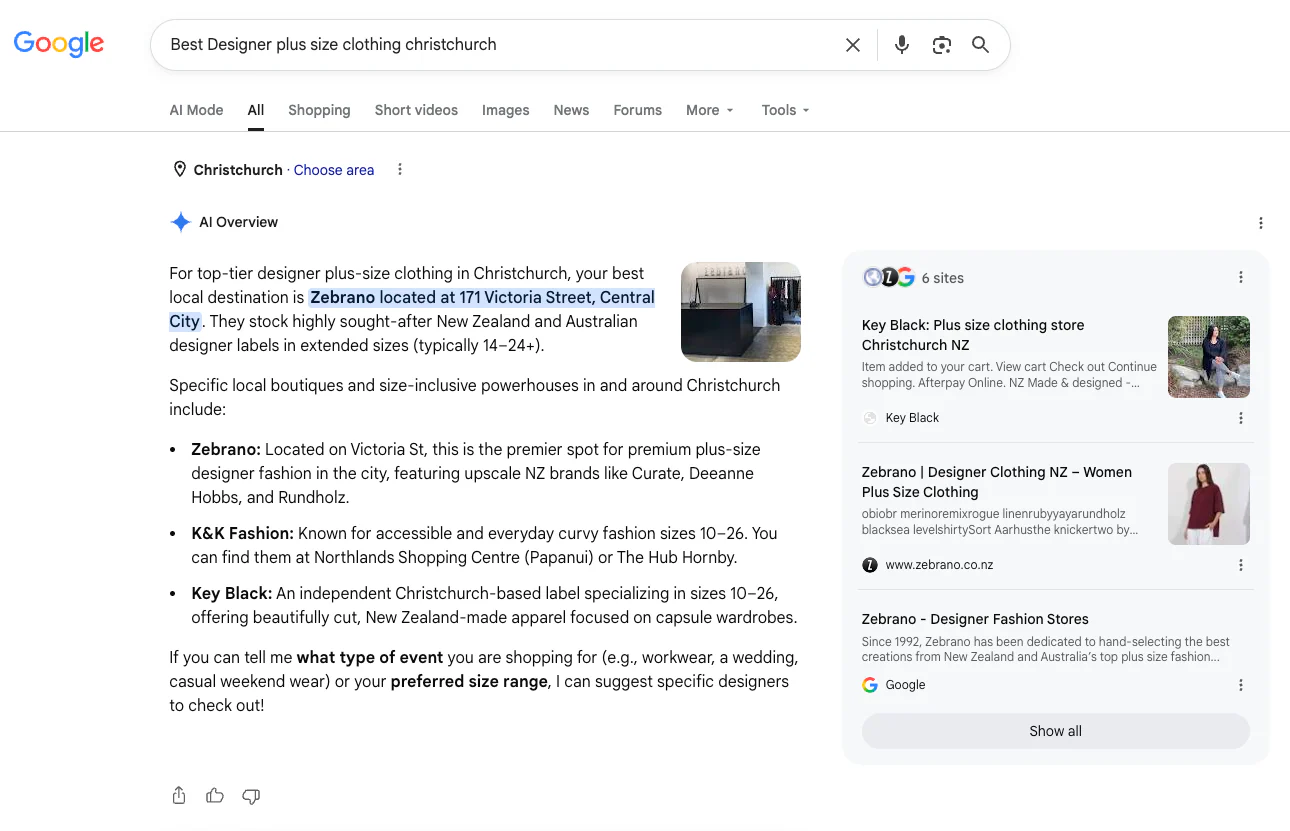
For a first look at your own business, compare the Visibility Checks. An ongoing comparison starts by agreeing the questions and capturing a baseline, not by promising a particular result.
Start with the truth
Start with what AI sees today.
Get a first look at your business, then decide what deserves attention.