Practical guide
How AI decides which local businesses belong on a shortlist
AI recommendations are built from connected evidence. Here are the practical business details that make a local firm easier to understand, compare and suggest.
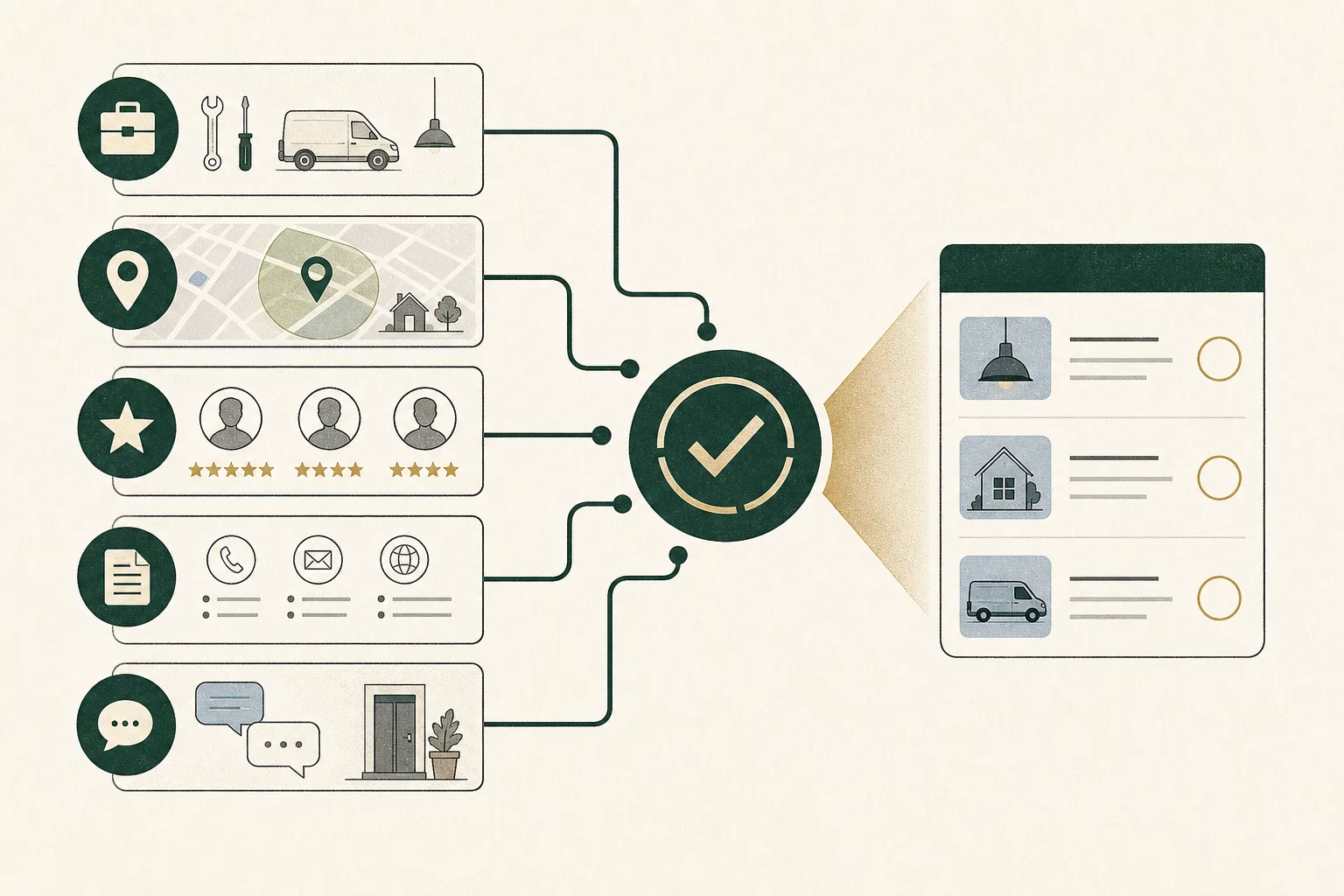
When someone asks an AI assistant to recommend a plumber, clinic, retailer or professional service, the system has to do more than find a nearby name. It has to work out which businesses fit the request and whether there is enough evidence to explain the shortlist.
Strong local visibility usually comes from several clear pieces of business information agreeing with each other.
AI needs to understand the service first
A business name and a broad category are rarely enough. A useful service page explains what the business actually does, who the service is for, what is included and what makes the offer a sensible fit.
For example, “physiotherapy” is broad. A page about sports injury rehabilitation in Hastings gives a customer and an AI system far more useful context. The same applies to builders, accountants, clinics, retailers and other local firms.
Location needs to be real and specific
Local relevance is stronger when a website clearly shows where the business is based, which areas it genuinely serves and how customers in those places can buy, book or enquire.
A national service area, a physical branch and a mobile service radius are different things. Explaining the difference helps AI avoid guessing and helps customers know whether the business can actually help them.
Trust comes from evidence that can be connected
Reviews, case stories, qualifications, team experience, completed work and clear policies all contribute to trust. They work best when they are attached to the relevant service, location or customer problem.
A page that says “trusted experts” makes a claim. A page that shows who completed the work, what was involved, where it happened and what the customer valued gives the claim something solid underneath it.
Consistency reduces uncertainty
AI systems can encounter a business through its website, business profiles, directories, reviews and other public sources. Consistent names, locations, services, contact details and descriptions make those pieces easier to connect.
Small contradictions do not automatically make a business invisible, but they create uncertainty. Keeping important details current is basic work that carries more weight than it gets credit for.
Helpful answers show practical fit
Customers often ask detailed questions before they are ready to call: cost ranges, timing, service areas, suitability, preparation, delivery, process and what happens next. Useful answers show expertise and help AI explain why a business may suit the request.
The aim is not to publish hundreds of thin FAQs. Start with the questions customers genuinely ask and answer them clearly on the page where they belong.
A practical local visibility check
- Can a new visitor tell exactly what you do within a few seconds?
- Are your locations and service areas stated clearly?
- Does each important service have specific proof nearby?
- Do your website and public profiles agree on the important details?
- Have you answered the questions customers ask before choosing?
- Can a customer see a simple next step?
The useful way to think about it
AI visibility is the result of making a business easier to understand and easier to trust. When services, locations, evidence and answers line up, AI has clearer reasons to include the business and customers have clearer reasons to take the next step.